
Factoring Reserve Explained: What Truckers Need To Know
Home / Blog
Factoring Reserve Explained: What Truckers Need To Know
- August 18, 2026
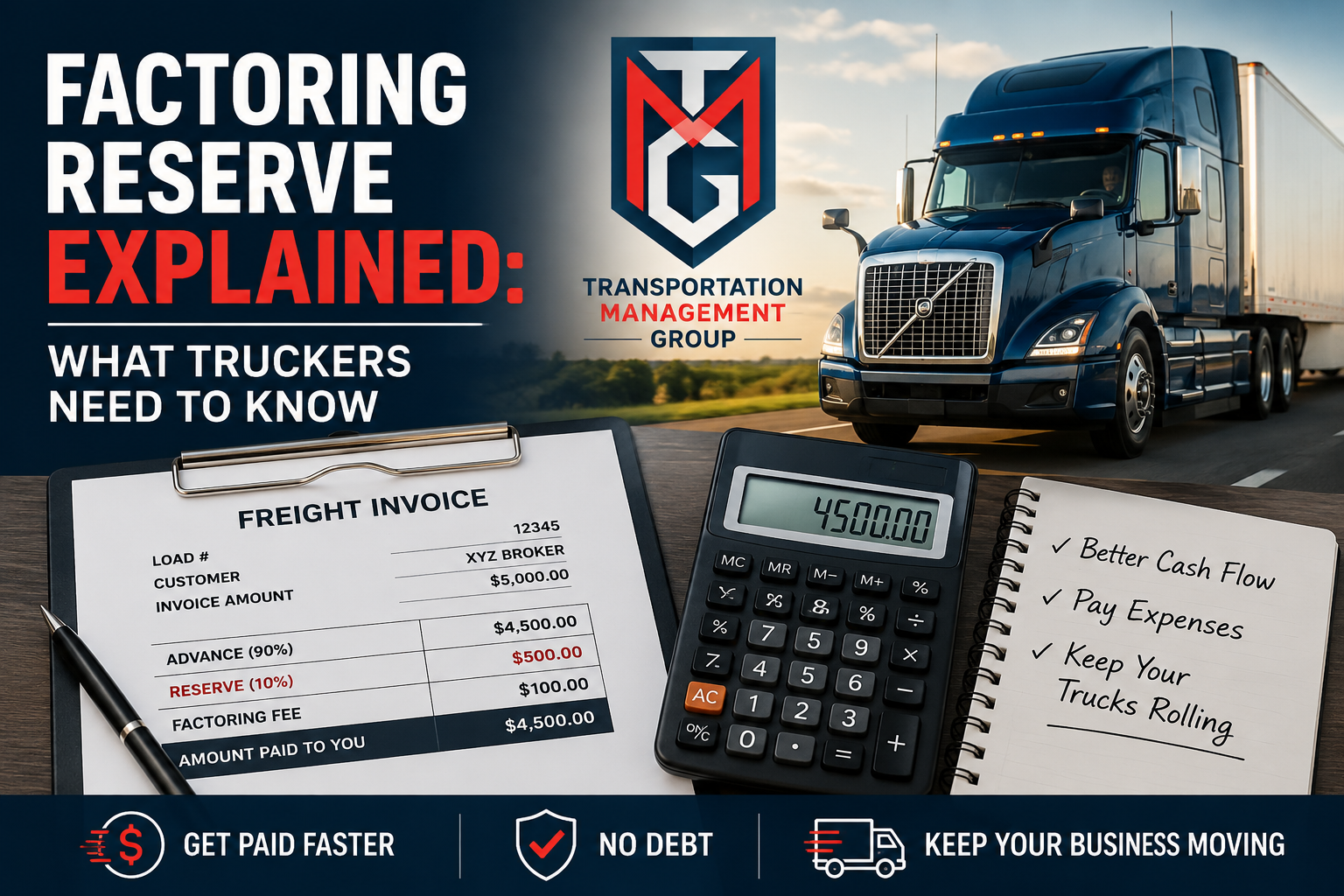
Cash flow can make or break a trucking company. You may complete a load today, submit your invoice tomorrow, and still wait 30, 60, or even 90 days to receive payment. During that time, fuel, insurance, repairs, truck payments, payroll, and other operating expenses continue to come due. Freight factoring can help bridge that gap by turning unpaid freight invoices into working capital much sooner. However, one term that often causes confusion for truckers is the freight factoring reserve.
Understanding how a factoring reserve works can help you compare factoring programs, estimate how much cash you will receive, and avoid surprises when an invoice is paid. A reserve is generally the portion of an invoice that a factoring company holds back temporarily after providing an advance. The reserve is typically released after the customer pays the invoice, minus any applicable factoring fees or other agreed-upon charges. While the exact structure varies between factoring companies, knowing the basics can make the factoring process much easier to understand.
What is a Freight Factoring Reserve?
A freight factoring reserve is the portion of an invoice that is not included in the initial advance from the factoring company. For example, imagine your trucking company submits a $2,000 freight invoice and the factoring company advances 90% of the invoice. You would receive $1,800 upfront, while the remaining $200 would be held as the reserve. Once the broker or shipper pays the invoice, the factoring company accounts for its fee and releases any remaining reserve according to your agreement. In other words, the reserve is not necessarily a fee or a permanent deduction from your invoice.
The purpose of a reserve is to give the factoring company a cushion while the invoice remains outstanding. It can help account for the difference between the amount advanced to the carrier and the final amount collected from the customer. The specific reserve percentage depends on the factoring company’s program and agreement. Some programs may offer higher advance rates, which can reduce the amount initially held in reserve. TMG, for example, advertises 100% advance rates on qualifying programs, minus the applicable factoring fee, so it is important to ask how a specific program handles reserves before signing an agreement.
How does a Freight Factoring Reserve Work?
The easiest way to understand a freight factoring reserve is to follow an invoice from pickup to payment. First, your trucking company delivers the load and submits the required paperwork, such as the rate confirmation, bill of lading, and invoice. The factoring company verifies the invoice and provides the agreed-upon advance. If the program includes a reserve, the remaining percentage stays with the factoring company until your customer pays the invoice. TMG explains that its standard process involves submitting your load documents, receiving funding, and having the factoring company handle the collection process with the customer.
Example of a Freight Factoring Reserve
Suppose you haul a load for $3,000 and your factoring agreement provides a 90% advance. You could receive $2,700 soon after submitting an approved invoice, while $300 remains in reserve. When the broker pays the $3,000 invoice, the factoring company deducts its agreed-upon factoring fee. If the fee were $60, the remaining $240 reserve would then be released to you, assuming there are no other deductions or adjustments. This example shows why trucking companies should look at both the advance rate and the reserve release terms when comparing factoring programs.
The timing of reserve releases can also vary. Some factoring companies may release the remaining balance as soon as the customer pays, while others may have specific procedures or conditions outlined in the factoring agreement. A trucking company should understand whether reserves are released automatically, how payment notifications are handled, and whether any additional charges can reduce the reserve. Keeping accurate invoices and supporting documentation can also make the process smoother. The IRS recommends that businesses maintain records that clearly show income and expenses, including supporting documents such as invoices and payment records.
Why Does the Freight Factoring Reserve Matter?
The reserve matters because it affects how much cash your trucking company has available immediately after factoring an invoice. If you are planning to use factoring to cover fuel, maintenance, payroll, insurance, or other expenses, you need to know how much money will actually reach your bank account. Looking only at the invoice amount can give you an incomplete picture of your short-term cash flow. The U.S. Small Business Administration recommends monitoring revenue, expenses, available cash, and cash flow projections as part of sound financial management.
For an owner-operator, even a relatively small difference in available cash can matter. If several invoices are factored at the same time, the amount held in reserves can add up quickly. That does not necessarily mean factoring is expensive or that the reserve is a problem, but it does mean you should understand how the numbers work before relying on expected cash. Ask the factoring company to show you an example using one of your actual invoices. A clear explanation should tell you the invoice amount, advance amount, reserve amount, factoring fee, and expected final payment.
Freight Factoring Reserve vs. Factoring Fee
One of the biggest misconceptions about factoring is that the reserve and factoring fee are the same thing. They are not. The reserve is generally an amount temporarily held back from the invoice, while the factoring fee is the cost charged by the factoring company for providing the factoring service. When the customer pays the invoice, the reserve may be released after the factoring fee and any other applicable charges are accounted for. Understanding this distinction can help you accurately calculate your true factoring costs.
For example, if you factor a $5,000 invoice with a 90% advance, you might initially receive $4,500 and have $500 held in reserve. If your factoring fee is $100, you would generally expect the remaining $400 to be released after the invoice is paid, assuming there are no other adjustments. The $500 reserve was not automatically a $500 cost. Only the applicable fee and other contractually agreed deductions reduce what you ultimately receive. Always review the factoring agreement to understand exactly how fees, reserves, advances, and additional charges are calculated.
What Should Truckers Ask About a Reserve?
Before choosing a factoring company, ask exactly how its reserve system works. Start by asking what percentage of each invoice is advanced and what percentage is held back. Then ask when the reserve is released and whether it happens automatically after the customer pays. You should also ask whether there are additional fees that can be deducted from the reserve, such as processing charges, credit-related fees, or other contractual costs. Finally, ask whether the factoring company offers different advance structures for owner-operators, new authorities, or established carriers.
It is also worth asking whether the factoring company provides tools that help you manage your cash flow. TMG’s freight factoring program includes features such as same-day funding, broker and shipper credit checks, fuel advances, and an online portal for managing invoices and payments. TMG Freight Factoring Services These features can be useful because factoring is not simply about receiving money faster. The right program should help you understand your receivables, reduce the stress of waiting on customers, and keep your trucks moving.
How a Reserve Can Affect Trucking Cash Flow
A freight factoring reserve can actually make cash flow planning easier when you understand it and account for it correctly. Instead of treating the full invoice amount as immediately available cash, you can build your budget around the amount you expect to receive upfront. You can then account for the reserve as money that may become available once the customer pays. This approach can give you a more realistic picture of the cash you have today and the cash you expect later. For trucking companies with multiple customers and invoices, that distinction can make financial planning much more predictable.
Cash flow management is especially important because profitability and available cash are not always the same thing. The SBA explains that businesses can use financial statements and cash flow projections to understand available cash and plan for future needs. For a trucking company, this could mean planning ahead for fuel purchases, scheduled maintenance, insurance payments, payroll, taxes, and truck payments rather than waiting until cash becomes tight. Factoring can help improve the timing of cash coming into the business, but the business owner still needs to monitor expenses and reserves carefully.
Choosing a Freight Factoring Company
When comparing factoring companies, do not make your decision based on the advertised factoring rate alone. Look at the advance rate, reserve structure, contract length, funding speed, additional fees, customer service, and how easy it is to submit invoices. A company with a slightly different rate could potentially provide a better overall fit if it offers transparent terms and the flexibility your trucking business needs. You should also make sure you understand what happens if a customer pays late, disputes an invoice, or fails to pay. Reading the factoring agreement carefully can help you understand your responsibilities before you begin factoring.
It can also help to choose a company that understands transportation. Trucking has unique cash flow challenges because carriers have significant operating expenses while often waiting weeks for payment. TMG specifically provides factoring services for owner-operators and small to mid-size fleets, with programs designed around the needs of transportation businesses. TMG Truck Factoring Services You can also learn more about the basics of owner-operator factoring in TMG’s Owner Operator Factoring Guide before deciding whether factoring fits your business.
Frequently Asked Questions About Freight Factoring Reserve
1. What is a factoring reserve?
A factoring reserve is the part of an invoice that is held back after you receive your advance. The reserve is usually released after your customer pays the invoice, minus any applicable fees.
2. Do I get my factoring reserve back?
Yes, in most cases, the remaining reserve is released after your customer pays the invoice. Any agreed-upon fees or adjustments are deducted first.
3. Is a factoring reserve the same as a factoring fee?
No. The reserve is money temporarily held back from your invoice. The factoring fee is the cost of using the factoring service.
4. How is a factoring reserve calculated?
The reserve is based on your advance rate. For example, with a 90% advance on a $2,000 invoice, $1,800 may be advanced and $200 held in reserve.
5. Can I get a higher advance rate?
Some factoring companies offer higher advance rates. A higher rate means you receive more money upfront and less is held in reserve.
Understand Your Reserve Before You Factor
A freight factoring reserve is an important part of understanding how invoice factoring works. It generally represents money that is temporarily held back from an invoice until your customer pays, while the factoring fee represents the cost of the factoring service. Knowing the difference can help you calculate your available cash, compare factoring programs, and make better financial decisions for your trucking company. Before signing an agreement, make sure you understand the advance rate, reserve percentage, fee structure, payment timing, and any additional charges. A transparent factoring company should be able to explain the entire process clearly and show you exactly how your invoices will be funded.
TMG understands that trucking companies need reliable cash flow to keep their trucks moving and their businesses growing. Our freight factoring programs are designed to help owner-operators and trucking companies get paid faster while providing tools such as same-day funding, fuel advances, credit checks, and online invoice management. Learn More About TMG Freight Factoring If you are tired of waiting weeks for brokers and shippers to pay, contact Transportation Management Group today to discuss your factoring options. TMG can help you understand your advance rate, reserve, fees, and funding options so you can choose a solution that fits your trucking business.
Partner with TMG Today
At Transportation Management Group, we believe trucking companies deserve better than slow payments and complicated financing. Our mission is to help you get paid faster, work smarter, and grow stronger, one load at a time.
If you’re ready to take control of your cash flow and stop waiting to get paid, contact TMG today to learn how our freight factoring solutions can work for your business