
New MC Authority Checklist
Home / Blog
New MC Authority Checklist
- August 6, 2026
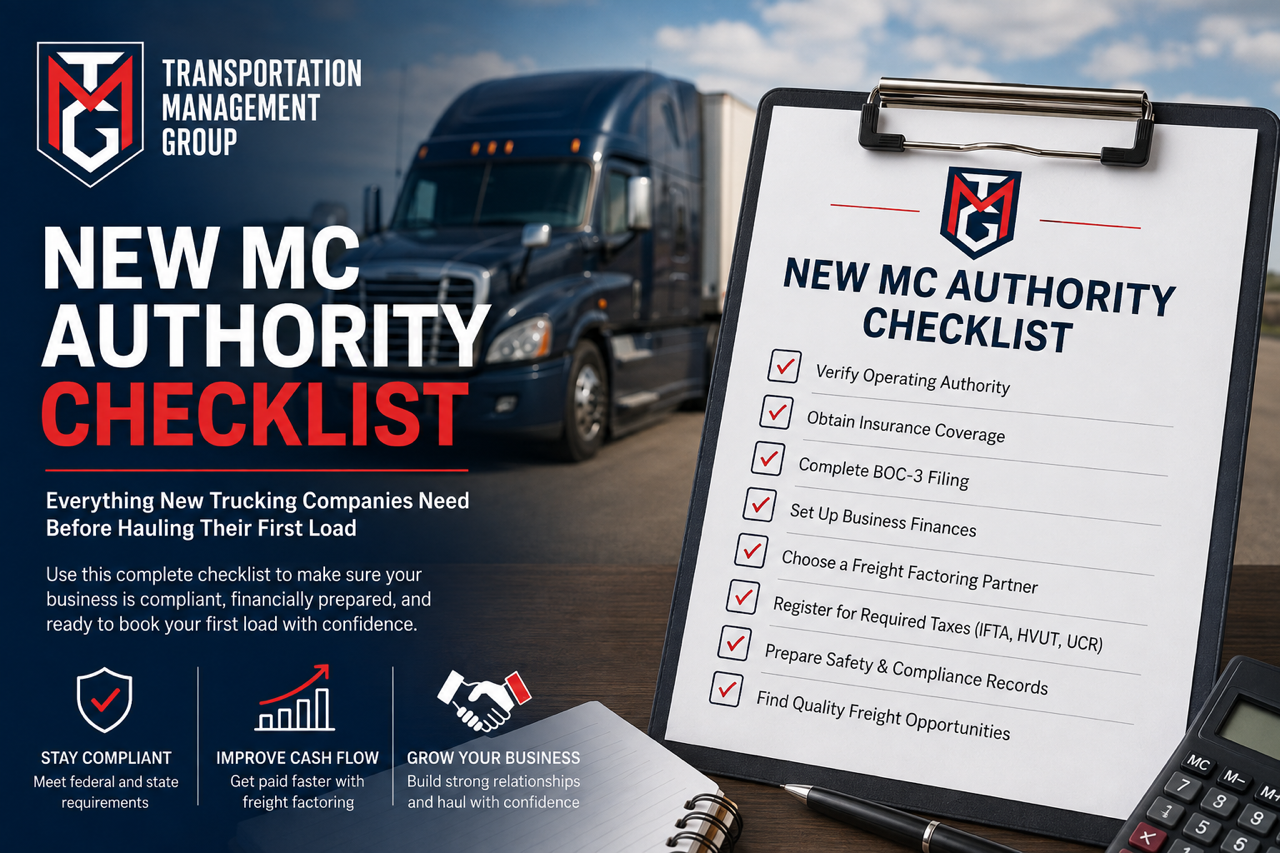
Starting a trucking company is an exciting milestone, but getting your operating authority is only the beginning. Many new carriers discover that obtaining an MC number does not automatically mean they are ready to haul freight or build a profitable business. There are several important steps that come after your authority becomes active, and overlooking even one can delay your first load or create unnecessary expenses. Following a complete new MC authority checklist helps you stay organized, compliant, and prepared for success. Whether you are an owner operator starting your own business or launching a small fleet, taking the time to complete each step will make your first months on the road much smoother.
New MC Authority Checklist at a Glance
Starting a trucking company requires more than receiving an MC number. Before booking your first load, make sure you have completed these essential steps:
☑ Verify your FMCSA operating authority is active
☑ Confirm your BOC-3 filing is complete
☑ Purchase required liability and cargo insurance
☑ Open a business bank account
☑ Set up accounting and bookkeeping
☑ Register for IFTA, UCR, and HVUT (if applicable)
☑ Organize safety and compliance records
☑ Establish a cash flow plan
☑ Choose a freight factoring company
☑ Begin building broker relationships
This checklist helps new carriers avoid delays, stay compliant, and build a strong foundation before hauling their first load.
Why Every New Carrier Needs a Checklist
The trucking industry has many moving parts, especially during the startup phase. Federal regulations, insurance requirements, equipment maintenance, and financial planning all play an important role in keeping your business operating legally and profitably. Without a clear plan, it is easy to miss deadlines or overlook important paperwork that brokers and shippers require.
A checklist gives you confidence that your business is prepared before you begin hauling freight. It also helps you avoid costly mistakes that can affect your reputation or cash flow. Completing these items before booking loads allows you to focus on growing your business instead of fixing preventable problems.
Your Complete New Authority Checklist
1. Verify Your Operating Authority Is Active
Receiving your MC number does not mean you can immediately begin hauling freight. Your authority must become active with the Federal Motor Carrier Safety Administration (FMCSA) after your insurance and BOC-3 filing have been processed. Before accepting any freight, verify your operating authority status using the FMCSA Licensing & Insurance System: Active authority demonstrates to brokers and shippers that your company is authorized to transport freight legally.
2. Obtain the Right Insurance Coverage
Insurance is one of the most important investments for a new carrier. Most freight brokers require minimum levels of liability and cargo insurance before working with a trucking company. Depending on the freight you haul, you may also need physical damage coverage, occupational accident insurance, or general liability insurance.
Review your policy regularly to ensure it meets customer requirements. Working with an insurance agent who specializes in commercial trucking can help you avoid coverage gaps that may prevent you from securing loads.
3. Complete Your BOC-3 Filing
Every motor carrier must have a BOC-3 filing completed before operating. This document designates legal process agents in every state where your company may conduct business. Fortunately, many filing services complete this process quickly, but it is essential to confirm the filing has been accepted before beginning operations.
4. Set Up Your Business Finances
Separating personal and business finances makes bookkeeping much easier and presents a more professional image. Open a dedicated business checking account, establish an accounting system, and create a monthly budget that accounts for fuel, maintenance, insurance, permits, payroll, and taxes.
Many new carriers underestimate how long customers can take to pay invoices. Waiting 30 to 60 days for payment can create cash flow challenges even when business is growing. Planning ahead helps ensure you can cover operating expenses while waiting for payments to arrive. To learn more about improving cash flow without taking on debt, read TMG’s blog on How to Improve Cash Flow in a Trucking Business Without Taking on Debt.
5. Choose a Reliable Freight Factoring Partner
Consistent cash flow is one of the biggest challenges for new trucking businesses. Freight factoring allows carriers to receive payment shortly after delivering a load instead of waiting weeks for customers to pay. This immediate access to working capital helps cover fuel, maintenance, payroll, insurance, and other operating expenses.
Transportation Management Group provides Freight Factoring Services designed specifically for trucking companies. Fast funding and dedicated customer support allow carriers to spend less time worrying about cash flow and more time finding profitable loads. Learn more about TMG’s Freight Factoring Services.
6. Register for Required Tax Programs
New carriers are responsible for several federal and state tax obligations. Depending on your operation, these may include the International Fuel Tax Agreement (IFTA), Heavy Vehicle Use Tax (HVUT), and Unified Carrier Registration (UCR). Missing registration deadlines can lead to fines and unnecessary delays.
The Internal Revenue Service provides complete information about the Heavy Vehicle Use Tax (HVUT). Working with a transportation accountant or tax professional also helps ensure your filings remain accurate throughout the year.
7. Prepare Your Safety and Compliance Records
Safety compliance begins on day one. Keep organized maintenance records, driver qualification files, inspection reports, and hours of service documentation. Establishing good recordkeeping habits early makes future audits much easier and demonstrates professionalism to customers and regulators.
Regular preventive maintenance also reduces costly breakdowns and keeps trucks operating safely. You can review federal safety regulations through the FMCSA Safety Resources.
8. Find Quality Freight Opportunities
Once your authority is active, you can begin searching for loads through freight brokers, load boards, direct shipper relationships, and transportation networks. While many brokers have minimum authority requirements, maintaining complete documentation and professional communication increases your chances of securing quality freight.
Focus on building long-term relationships instead of chasing every available load. Reliable service often leads to repeat business and stronger rates over time.
Common Mistakes New Carriers Should Avoid
Many new trucking companies struggle during their first year because they focus only on finding freight while overlooking the business side of trucking. Accepting low-paying loads, failing to budget for maintenance, or waiting too long to address cash flow issues can quickly reduce profitability. Staying organized and reviewing your checklist regularly helps avoid these common pitfalls.
Another frequent mistake is delaying investments that support long-term growth. Professional bookkeeping, preventive maintenance, compliance management, and dependable freight factoring all contribute to a stronger business foundation. If you’re comparing providers, see how Transportation Management Group supports growing trucking businesses.
How Transportation Management Group Supports New Carriers
Starting a trucking business comes with enough challenges without worrying about delayed payments. Transportation Management Group helps new carriers improve cash flow through fast, dependable freight factoring services. Instead of waiting weeks for customer payments, carriers receive funding quickly so they can continue operating with confidence.
Beyond funding, TMG understands the trucking industry and works alongside carriers to support long-term growth. Whether you are hauling your first load or expanding your fleet, having a financial partner that understands transportation can make a meaningful difference as your business grows.
Launching a trucking company requires much more than receiving an MC number. Completing a thorough new MC authority checklist ensures your business is legally compliant, financially prepared, and ready to build strong relationships with brokers and customers. Taking time to establish good business practices from the beginning reduces stress, improves cash flow, and positions your company for long-term success.
FAQ’S
1. How long does it take for new MC authority to become active?
In most cases, operating authority becomes active approximately 21 days after the FMCSA accepts your application, provided all insurance and BOC-3 requirements have been completed.
2. Can I haul freight immediately after receiving my MC number?
No. Your authority must be officially active before you can legally transport freight for hire.
3. Why is freight factoring helpful for new trucking companies?
Freight factoring provides faster access to cash by purchasing unpaid invoices, allowing carriers to pay expenses without waiting for customer payments.
4. What documents do brokers typically require?
Most brokers request active operating authority, proof of insurance, W-9 forms, safety information, and carrier agreements before assigning loads.
5. What is the biggest financial challenge for new carriers?
Cash flow is often the biggest obstacle because many customers take 30 to 60 days to pay invoices while operating expenses continue every day.