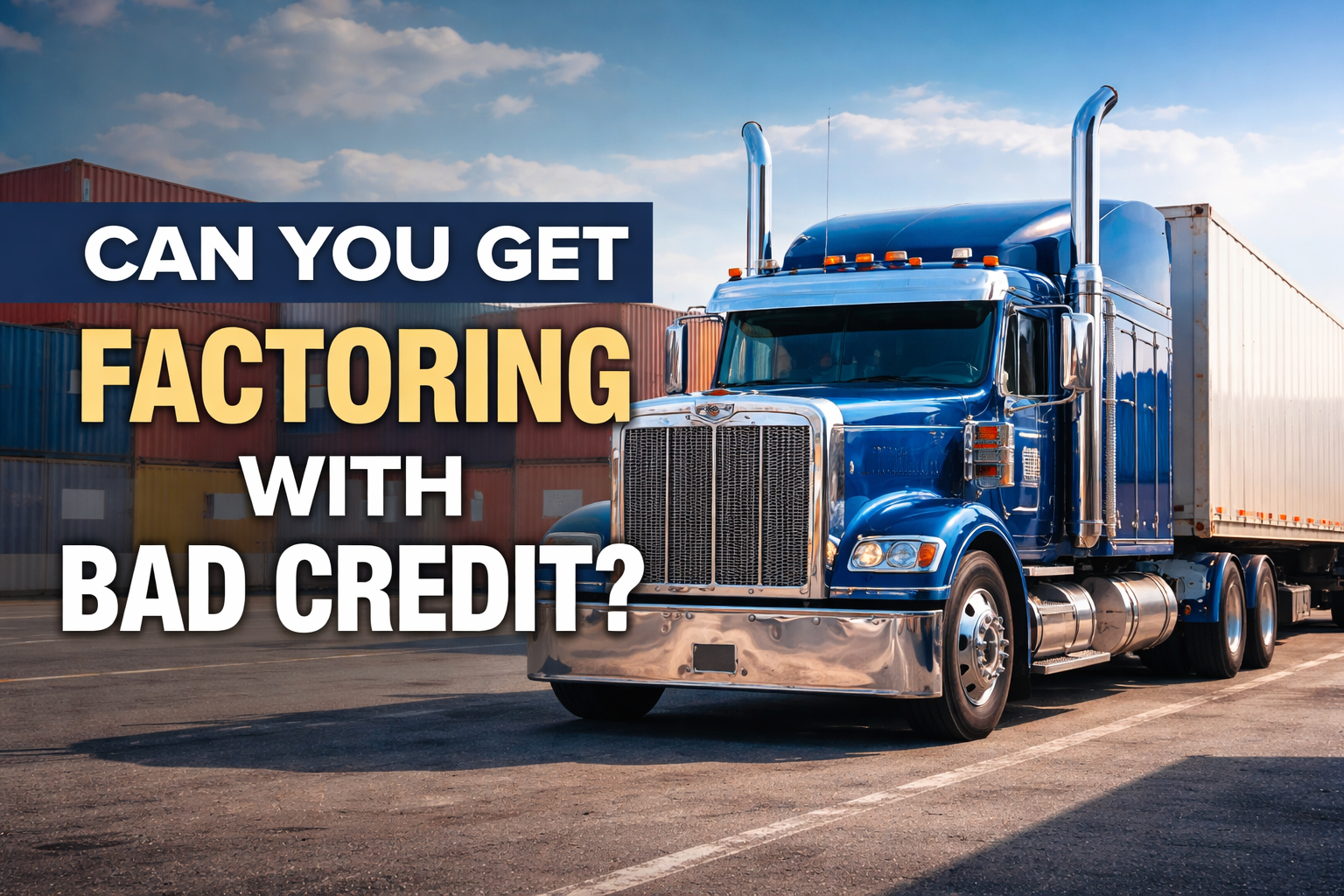
Can You Get Factoring with Bad Credit?
Home / Blog
Can You Get Factoring with Bad Credit?
- February 27, 2026
If you are an owner-operator or small fleet owner with bad credit, you have probably asked this question before:
Can I even qualify for invoice factoring?
Maybe your credit score dropped after a tough year. Maybe you had late payments, high credit card balances, or even a past bankruptcy. In trucking, one breakdown or slow freight season can impact your finances quickly.
The good news is this. In most cases, yes, you can get factoring with bad credit.
Invoice factoring works very differently from a traditional bank loan. Approval is usually based on your customers’ credit, not just yours. That makes factoring one of the most accessible cash flow tools available to trucking companies.
Let’s break down how it really works.
How Invoice Factoring Is Different from a Bank Loan
One of the biggest misconceptions about factoring is that it is a loan. It is not.
Factoring Is Not Debt
When you factor an invoice, you are selling that invoice to a factoring company in exchange for immediate cash. You are not borrowing money. There are no long term monthly payments like a traditional loan.
This means:
No new debt added to your balance sheet
No fixed monthly loan payments
No long term repayment schedules
Because it is not structured as a loan, credit requirements are often more flexible.
Approval Is Based on Your Customers’ Credit
This is the most important difference.
Factoring companies typically evaluate the creditworthiness of your broker or shipper. If they have a strong payment history and good credit, the invoice is considered lower risk.
The Federal Motor Carrier Safety Administration outlines the regulatory framework for trucking companies, but payment risk largely depends on the broker or shipper you haul for.
If you are hauling for reputable brokers who pay on time, your approval chances are much higher, even if your personal credit score is low.
What Credit Score Do You Need for Factoring?
There is no universal minimum credit score required for invoice factoring.
Many factoring companies do not publish a required credit score because approval depends on multiple factors.
There Is No Set Minimum Score
In trucking, it is common for factoring companies to work with:
Credit scores in the 500 to 650 range
Past late payments
High credit utilization
Previous financial hardship
Some companies even work with carriers who have had a prior bankruptcy, depending on how recent it was and whether it has been discharged.
The reason is simple. The invoice is backed by your broker or shipper, not just your personal credit profile.
When Your Credit Might Matter More
There are situations where your credit could play a bigger role in approval:
Very new authority with no payment history
Active bankruptcies that are not resolved
Unpaid tax liens
History of fraud or double factoring
Transparency is critical. If you are upfront about your situation, many factoring providers are willing to work with you.
Why Factoring Companies Focus on Brokers
Your invoice is only valuable if the broker or shipper pays it.
That is why factoring companies spend significant time reviewing broker credit ratings and payment history.
You can monitor industry payment trends through trusted data sources such as the Bureau of Transportation Statistics.
If your freight customers have strong credit and a solid history of paying carriers on time, the invoice is considered secure.
This structure makes factoring accessible to trucking businesses that may not qualify for traditional bank loans.
Can Startups with Bad Credit Qualify?
Yes, in many cases.
Even if you are a new authority, factoring may still be available if:
You are hauling for established brokers
Your paperwork is accurate and complete
You maintain required insurance coverage
You follow compliance standards
The Small Business Administration explains that traditional business loans rely heavily on personal credit history. You can see more about how loan approvals work here.
Factoring works differently because it is asset based. The asset is your invoice.
For many new carriers with limited credit history, factoring is often easier to obtain than a small business loan.
What Could Hurt Your Chances of Approval?
While bad credit alone is not usually a deal breaker, certain issues can reduce your approval odds.
These include:
Open bankruptcies that are not disclosed
Unresolved tax liens
Attempting to factor the same invoice with multiple companies
Poor communication during the application process
Most denials are not because of a low credit score. They are usually due to risk concerns or incomplete documentation.
Clean paperwork matters. That includes:
Signed rate confirmations
Clear bills of lading
Accurate invoice details
Good documentation shows professionalism and reduces risk.
How to Improve Your Approval Odds
If you are worried about your credit score, here are practical ways to improve your chances.
Haul for Reputable Brokers
Work with brokers who have strong payment histories. The stronger the broker’s credit profile, the easier approval becomes.
Keep Documentation Clean
Submit:
Signed delivery paperwork
Clear rate confirmations
Accurate invoice amounts
Missing signatures and incomplete paperwork slow down funding and create risk concerns.
Be Honest About Your Credit Situation
If you had a financial setback, explain it. Many factoring companies understand that trucking is unpredictable. A breakdown or freight downturn can affect anyone.
Factoring vs Traditional Financing for Bad Credit
Let’s compare factoring with a typical bank loan.
Bank Loan:
Heavy focus on personal credit score
Long approval timelines
Requires strong financial statements
May require collateral
Invoice Factoring:
Focuses on broker credit
Faster approval process
No long term debt
Based on completed work
If your credit score is less than ideal, factoring often provides faster access to working capital than traditional financing options.
The Bottom Line: Yes, You Can Get Factoring with Bad Credit
For most trucking companies, bad credit does not automatically disqualify you from invoice factoring.
Because factoring is based primarily on the strength of your customers, not just your personal credit, it remains one of the most accessible cash flow solutions in the industry.
If cash flow delays are slowing down your growth, factoring may allow you to:
Get paid the same day
Cover fuel and payroll
Take on more loads
Scale your fleet faster
Your credit score tells part of your financial story. Your invoices tell another. In trucking, strong customers can often outweigh past credit challenges.
Frequently Asked Questions
Does invoice factoring check personal credit?
Some factoring companies perform a soft credit check, but approval is usually based more on your broker’s creditworthiness than your personal score.
Can I get factoring with a 500 credit score?
In many cases, yes. There is no universal minimum score. Approval depends more on the quality of your invoices and your customers.
Can startups qualify for factoring?
Yes. Even new authorities can qualify if they haul for reputable brokers and submit clean paperwork.
Will factoring improve my credit score?
Factoring itself does not automatically improve your personal credit score. However, consistent cash flow can help you stay current on obligations, which may positively impact your credit over time.
What disqualifies a trucking company from factoring?
Common issues include unresolved fraud concerns, double factoring invoices, or serious compliance problems. Bad credit alone is rarely the sole reason for denial.
Is factoring better than a loan for bad credit?
For many trucking companies with credit challenges, factoring is easier to obtain than a traditional bank loan because it is based on receivables rather than personal credit history.