Top Trucking Industry Challenges in 2025 and How to Overcome Them
Home / Blog
Top Trucking Industry Challenges in 2025 and How to Overcome Them
- September 30, 2025
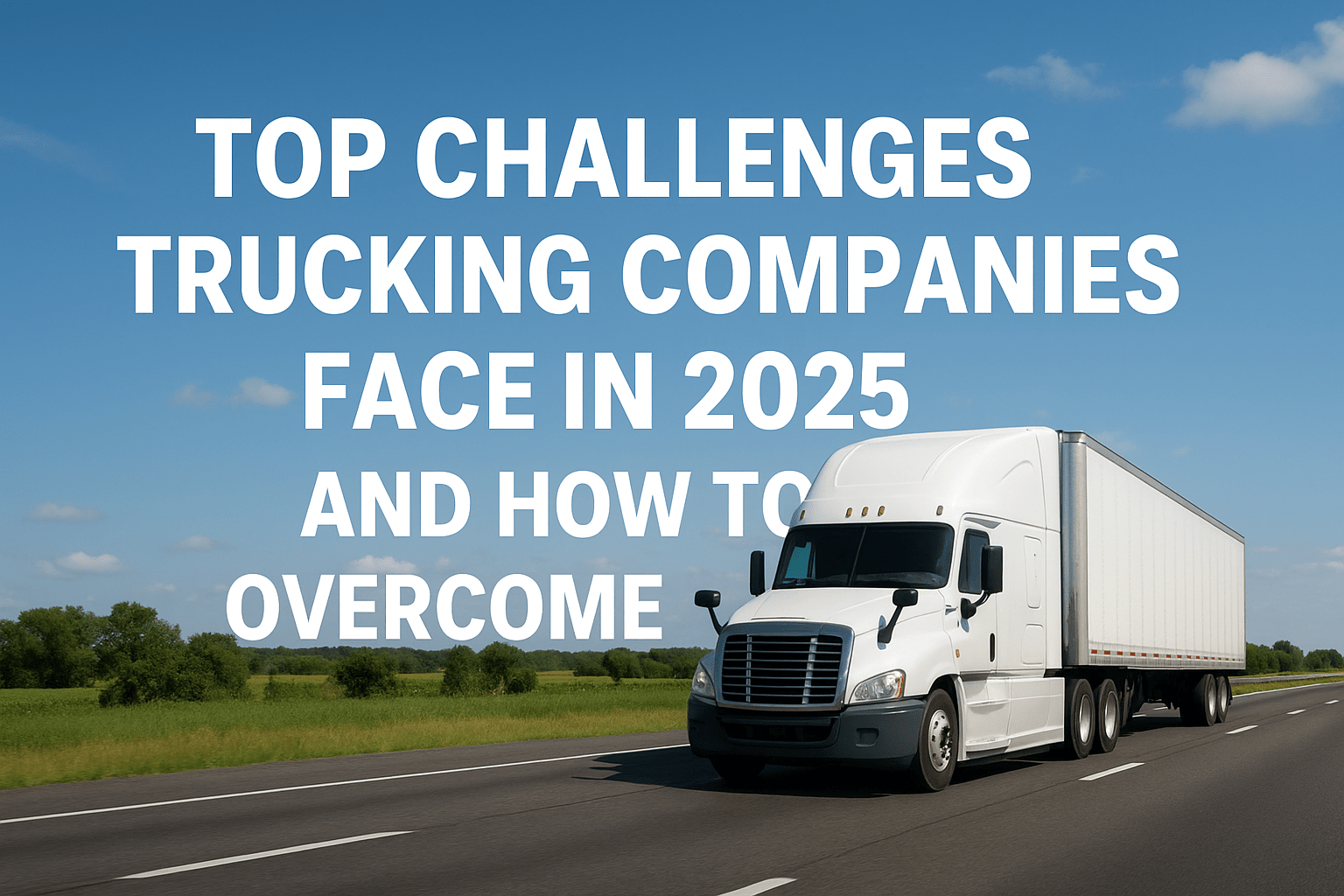
The trucking industry is facing a series of challenges in 2025 that are impacting operations, profitability, and growth. From economic uncertainties to workforce shortages, these issues require proactive strategies and smart decision-making. In this article, we will explore the top challenges trucking companies are encountering this year and provide actionable solutions to navigate them effectively.
1. Economic Uncertainty and Freight Demand
The Challenge
Freight rates have become increasingly volatile, making it difficult for trucking companies to predict earnings. Shippers are reducing loads, and brokers are squeezing rates, leaving carriers with less profitable lanes. This economic uncertainty creates a challenging environment for fleet operators trying to maintain steady cash flow.
The Solution
To adapt to these fluctuations, trucking companies should diversify their freight types and build strong relationships with reliable brokers. By expanding into various freight categories and partnering with dependable brokers, carriers can mitigate risks and maintain a more consistent revenue stream.
2. Supply Chain Disruptions
The Challenge
Delays are prevalent across the supply chain, from congested ports to inefficient warehouse operations. These disruptions lead to increased waiting times, affecting delivery schedules and overall efficiency. Carriers often find themselves sitting idle, which not only wastes time but also reduces profitability.
The Solution
Implementing backup plans and choosing brokers who prioritize timely deliveries can help mitigate the impact of supply chain disruptions. Proactive planning and collaboration with reliable partners are essential to maintaining smooth operations despite external challenges.
3. Rising Operational Costs
The Challenge
Operational costs, including fuel, maintenance, and insurance, continue to rise, putting pressure on trucking companies’ bottom lines. With freight rates remaining relatively stable, carriers are finding it challenging to balance expenses and maintain profitability.
The Solution
Leveraging tools like fuel cards can lead to significant savings. For instance, the LoadConnex Fuel Card offers an average of 50 cents per gallon savings at over 2,500 truck stops. Additionally, regular vehicle maintenance and efficient route planning can help reduce operational costs and improve overall efficiency.
4. Equipment Availability and Instability
The Challenge
The availability of new trucks is limited, and when they are available, they come at a high cost. This situation forces many carriers to operate older equipment that is more prone to breakdowns. The scarcity of spare parts further exacerbates the issue, leading to extended downtimes and increased repair costs.
The Solution
Proactive fleet management is crucial in this scenario. Regular inspections, timely replacements, and budgeting for repairs can help minimize unexpected breakdowns. Additionally, setting aside funds for equipment-related expenses ensures that carriers are prepared for unforeseen costs.
5. Driver Shortage and Workforce Demographics
The Challenge
The trucking industry is experiencing a significant driver shortage, primarily due to an aging workforce nearing retirement and difficulties in attracting younger talent. This shortage leads to increased competition for qualified drivers and higher wages, further escalating operational costs.
The Solution
Improving work-life balance and investing in training programs can make the profession more appealing to younger individuals. Offering competitive salaries, benefits, and career development opportunities can help attract and retain drivers, alleviating the shortage over time.
6. Regulatory Compliance and Safety Standards
The Challenge
The trucking industry is subject to a myriad of regulations, from emissions standards to driver hours of service. Keeping up with these ever-changing rules can be time-consuming and challenging for fleet operators, especially smaller companies with limited resources.
The Solution
Staying informed about regulatory changes and investing in compliance management systems can help ensure adherence to safety standards. Regular training for drivers and staff on compliance requirements is also essential to minimize risks and avoid penalties.
7. Technology Integration and Cybersecurity
The Challenge
As the industry embraces digital tools for fleet management, the risk of cyber threats increases. Protecting sensitive data and ensuring the security of digital platforms are critical concerns for trucking companies adopting new technologies.
The Solution
Implementing robust cybersecurity measures, such as encryption and multi-factor authentication, can protect against potential threats. Additionally, regular software updates and employee training on data security best practices are vital to safeguarding company and customer information.
8. Environmental Sustainability and Emission Standards
The Challenge
Increasing pressure to reduce carbon footprints and comply with stringent emission standards is prompting many trucking companies to reconsider their operations. Transitioning to electric or hybrid vehicles involves significant investment and infrastructure changes.
The Solution
Exploring federal and state incentives for green initiatives can offset some of the costs associated with transitioning to more sustainable practices. Gradually integrating electric or hybrid vehicles into the fleet and optimizing routes for fuel efficiency can contribute to environmental goals while managing expenses.
9. Infrastructure Challenges and Traffic Congestion
The Challenge
Aging infrastructure and rising traffic congestion lead to longer travel times, increased fuel consumption, and higher operational costs. These issues are particularly prevalent in urban areas and along heavily trafficked routes.
The Solution
Investing in route optimization software can help identify the most efficient paths, avoiding congested areas and reducing travel times. Additionally, scheduling deliveries during off-peak hours can minimize exposure to traffic-related delays.
10. Freight Payment Delays
The Challenge
Delayed payments from brokers and shippers can strain cash flow, making it difficult for trucking companies to meet financial obligations. This issue is particularly challenging for small to mid-sized carriers operating with limited financial reserves.
The Solution
Utilizing freight factoring services can provide immediate cash flow by advancing payments on outstanding invoices. This approach allows carriers to maintain operations without waiting extended periods for payment, ensuring financial stability. TMG can help with your finance needs.
The trucking industry in 2025 faces a complex landscape of challenges, from economic uncertainties to workforce shortages. However, by adopting proactive strategies, embracing technology, and fostering strong partnerships, trucking companies can navigate these obstacles effectively. Staying informed, adaptable, and forward-thinking will be key to thriving in this evolving industry.